 Tours to Sicily
What to Wear in Sicily: The Working Packing List
What to wear in Sicily comes down to three things: the heat, the church dress codes and the ground under your feet. Inland summers pass 35 C, so linen and cotton beat synthetics, especially on the gravel temple ridge at Agrigento where shade is close to zero. Churches on the main tour routes enforce covered shoulders and knees, and a light scarf solves that over summer clothes. Cobblestones and stepped village lanes such as Savoca and Forza d'Agrò rule out smooth soles and heels, so shoes are the first decision, not the last. This working packing list is built from the day tours themselves, from the three-hour market walk in Palermo to the two-hour boat run off Taormina and the nine-hour loop to Syracuse and Noto. If you have not picked your routes yet, start with the Sicily tours compared side by side and pack for the days you actually booked. Dress for the ground, the sun and the church door, in that order. Pack the list below first, then open our Sicily tours roundup when the packing turns into a booking.
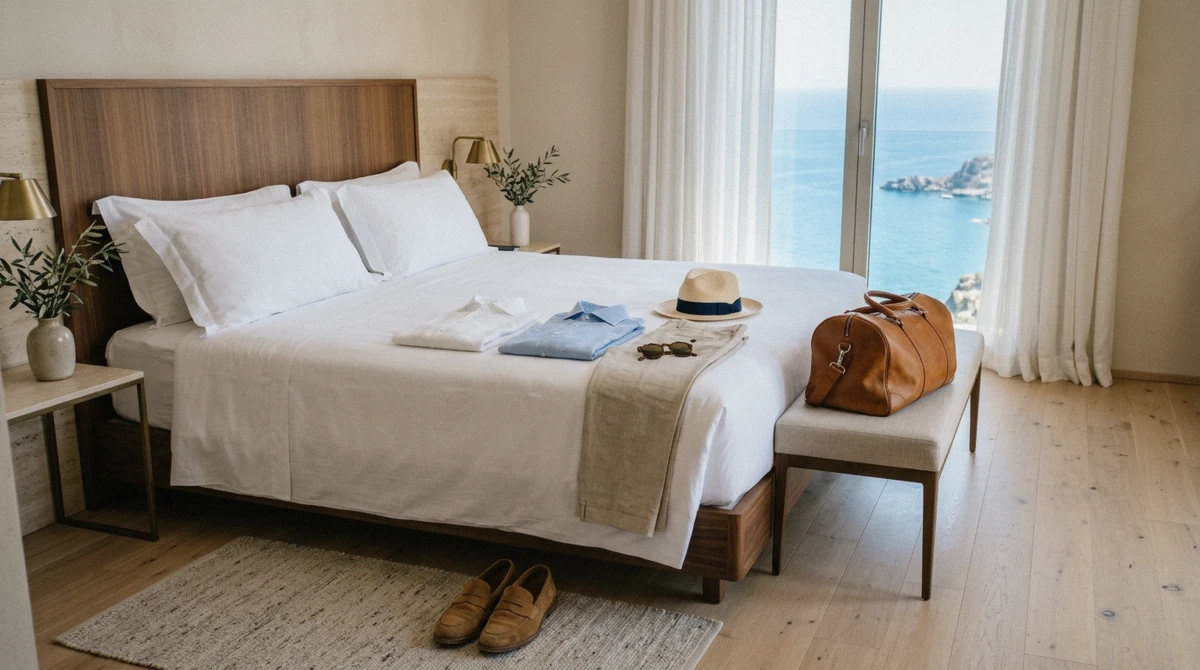
Illustrative generated image.
Quick answer Linen in summer, covered shoulders for churches, grippy shoes for cobbles and steps
Wear breathable natural fabrics in summer, because inland temperatures pass 35 C and the Agrigento ridge has almost no shade. Carry a light scarf or a linen shirt so you can cover shoulders and knees at Monreale, Cefalù and Ortigia's Duomo without a bag swap. Choose shoes with real grip, since stepped lanes in Savoca and Forza d'Agrò and cobblestones across the old towns make smooth soles and heels a mistake. On boat days bring swimwear, a towel and sun protection, and rent snorkel gear there for EUR 10 if you do not pack your own. In winter a windproof layer matters more than a heavy coat, because coastal cities run 15 to 16 C.
Key takeaways
- A light scarf or linen shirt covers the shoulders-and-knees rule on the Monreale and Cefalù half-day and at Ortigia's Duomo without a change of clothes.
- Pack a real hat, sunscreen and a full water bottle for the Valley of the Temples, where the gravel path runs long with no shade, on the Palermo: Agrigento and the Valley of the Temples Day Tour.
- Swimwear, a towel and sun protection cover the Giardini Naxos, Taormina and Isola Bella Blue Grotto Boat Tour, with snorkel gear rentable for EUR 10.
What to Wear in Sicily: The Working Packing List
Here is the working list, matched to the routes. It assumes a week of day tours from Palermo or Catania rather than a single-base beach stay.
- Linen or cotton shirts and trousers for summer days, since inland heat passes 35 C and synthetics hold it against you
- A light scarf or a spare linen shirt for church entries, because Monreale, Cefalù and Ortigia's Duomo enforce covered shoulders and knees
- Shoes with real grip and closed toes, because cobblestones and stepped village lanes rule out smooth soles and heels
- A real hat with a brim, not a cap with a thin bill, for the temple ridge where shade is close to zero
- Sunscreen and a full water bottle, the standing advice for Agrigento
- Swimwear and a quick-dry towel for the boat day off Isola Bella
- A windproof layer for winter city days, when coastal temperatures run 15 to 16 C and wind matters more than bulk
- One smarter shirt or dress for dinner, nothing that needs heels to reach the restaurant
Everything on this list earns its place on a specific route. The sections below break it down by season, by church days, by ground conditions and by the boat, so you can cut it down for a shorter trip.
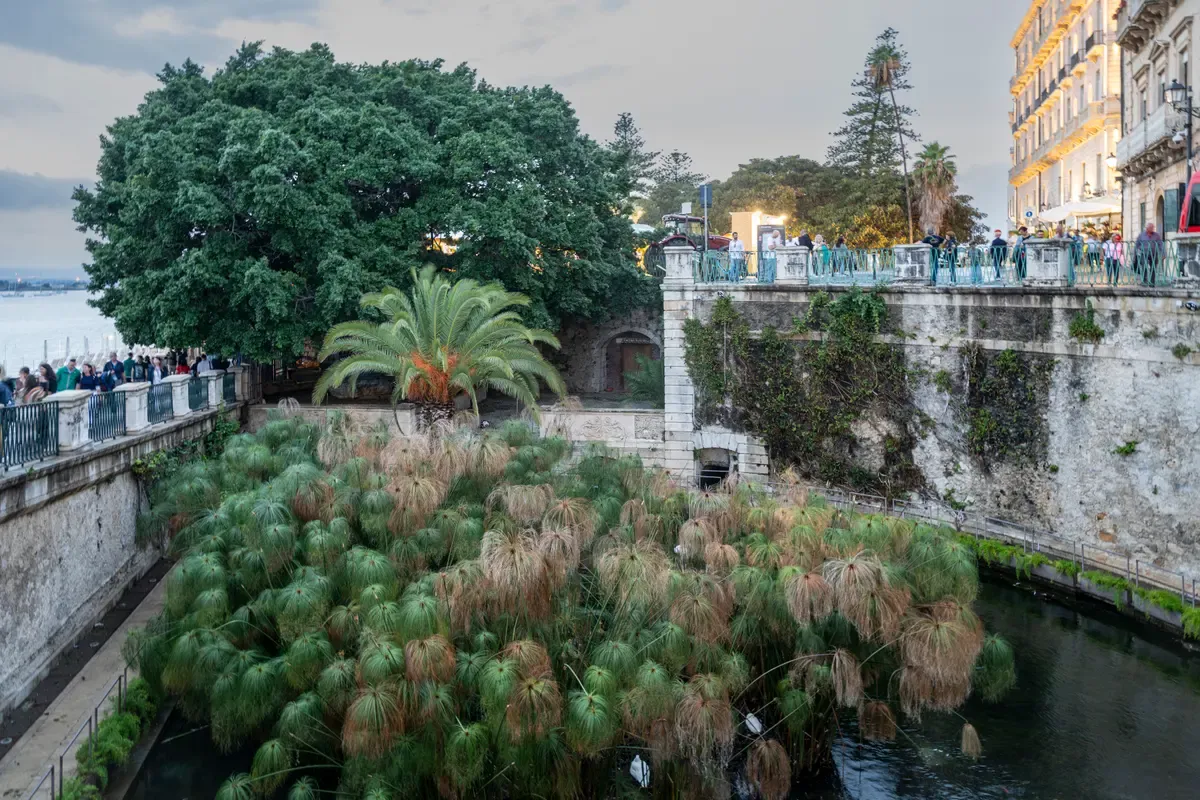
The Ortigia waterfront, where the evening stays warm long after the ridge cools. Photo: Cayambe, CC BY 4.0, Via Wikimedia Commons
The Season Split: Summer, Shoulder, Winter
Sicily does not have one packing list. It has three, and the difference is bigger than most visitors expect. Summer is a heat problem, the shoulder seasons are a layering problem, and winter is a wind problem.
The table below maps each season to the routes you are likely walking and what that means for your bag.
If you are still deciding when to come rather than what to wear, the month-by-month breakdown in our Best Time to Visit Sicily: A Month-by-Month Verdict guide settles that first. The clothing follows the calendar, not the other way round.
| Season | Typical conditions | What this means for clothes | Routes affected |
|---|---|---|---|
| Summer (July-August) | Inland temperatures pass 35 C | Linen and cotton, a real hat, sunscreen, full water bottle | Agrigento day tour, Palermo market walk, Godfather villages |
| Shoulder (May-June, September-October) | 20-28 C on the coasts | Breathable layers, one light layer for hill villages | All routes, including Syracuse and Noto |
| Winter (November-February) | 15-16 C on the coasts | Windproof layer over warm layers, no heavy coat needed | City days in Palermo, Catania and Syracuse |
Winter: wind beats bulk
Winter city days along the coasts run 15 to 16 C, which sounds mild until the wind comes off the water. A windproof layer matters more than a heavy coat on a walking day through Palermo or Syracuse. Pack one warm mid-layer and a shell, not a parka you will lug around by lunchtime.
Whichever season you pick, the routes cost roughly the same, so the clothing decision does not change your budget much. From $86 per person for the Palermo street food walk to $122 per person for the Syracuse day with lunch, you are dressing for a long walking day either way. If costs are your open question, the Sicily tour price comparison lays out every listing next to its route and duration.
Jeans deserve their own sentence: they are normal in Sicilian cities and perfectly readable on an evening out, but they are the wrong answer to an August afternoon, when the temple ridge and the market lanes reward anything loose and breathable instead.
Church Dress Codes on Tour Days
The scarf solution
A light scarf or a linen shirt solves the dress code over summer clothes without a bag swap. Tie the scarf around your shoulders at the church, untie it outside. Or keep a second linen shirt folded in your day pack and put it on over your t-shirt.
Either approach weighs almost nothing, and it covers you at Monreale, Cefalù and Ortigia on a single booking. Men should note the rule applies equally, a t-shirt is fine but a vest is not, and shorts that end above the knee are a risk at the door. This is not stated per-church on the listings, so the safe play is the same cover for everyone.
Shoes That Survive Sicilian Ground
Ortigia and Noto
The Syracuse and Noto day is nine hours of old-town walking on cobblestones and flagstones. Same rule. Broken and uneven paving is the norm across Sicily's historic centers, and a rolled ankle on day two ruins the rest of the week.
One pair of grippy closed shoes covers every route in the catalog, which is why it earns the top slot in the packing list.
On the Boat Days: What Actually Helps
Snorkel gear: pack it or rent it
Snorkel gear rents for EUR 10 on the boat if you do not pack your own. If you own a mask and snorkel, bring them, they weigh almost nothing and free up the rental money for the boat itself, which starts from $41 per person. The tour is the cheapest day in the catalog, and the entry fee for gear is the only add-on noted on the listing.
Water shoes are worth considering if you have them, since landing points on a Grotto trip are not stated and rocky entries are common on this coast, but the listings do not require them.
One practical note on layering for the boat: mornings on the water are cooler than the beach, and wind picks up with speed. The same windproof layer that serves your winter city days folds small enough to bring along in the shoulder seasons. If your trip combines the boat with town days in Taormina, keep the bag light and shared between the two.
The Temple Ridge and the Sun
Timing and pacing
The Palermo day tour to Agrigento runs eight hours door to door, with temple entry paid separately from the $72 per person tour price. That is a long day in exposed conditions, and the clothing choices that feel fussy in the hotel parking lot feel obvious by the second temple. Every item on the packing list earns its place by the midpoint of this route, which is why it anchors the summer section.
The Agrigento day tour is where this list earns its keep.
What You Do Not Need to Pack
A packing list earns trust by what it cuts. Sicily's tour days do not require most of what resort packing lists suggest, and the weight you save matters on nine-hour days.
- Heels, of any height, for any reason. Stepped lanes and cobblestones rule them out
- A heavy coat in winter. A windproof layer covers 15 to 16 C coastal days better
- Beach wear for the temple day. The Agrigento ridge is gravel and sun, not sand
- One outfit per day. The same linen pieces repeat fine across a week of tour days
- A formal dinner wardrobe. A smarter shirt or dress that works with flat shoes covers every restaurant night
- Fancy snorkel gear. It rents for EUR 10 on the boat day, so renting beats packing for one two-hour trip
- Umbrellas in summer. The heat problem, not rain, is the weather risk on most routes
One honest exception: if your trip includes days outside the tour catalog, for example independent travel by train along the coast, the same list holds. Our Getting Around Sicily Without a Car guide covers those days, and the packing logic does not change, since stations and old towns mean the same cobblestones and the same sun.
Dressing Like a Local Without a Costume
The one rule worth borrowing
The most local thing you can wear is the scarf or linen shirt over summer clothes, because that is exactly what Sicilians do between the street and the church door. It solves the dress code, the evening breeze and the sun, and it weighs nothing. For everything else, the working list at the top of this page is the answer, and the routes in the catalog are the reason.
If you are weighing whether a guided day is worth the money at all, our Are Sicily Tours Worth It? An Honest Verdict page gives the plain answer, and our How Many Days in Sicily guide helps you size the wardrobe to the trip length.
And when the suitcase is closed, go compare all Sicily day tours to see which of these days you packed for.
One Bag for the Week: A Working Rotation
The rotation that works: two shirts that wash overnight, one warmer layer, one pair of walking shoes worn on the plane, and dress-code insurance in the form of a linen shirt or scarf that lives in the day bag. Everything on a Sicily week mixes with everything else, and the laundry rhythm matters more than the outfit count because the markets, Temples and boats do not care what you wore yesterday.
Fabrics do the work. Linen and cotton survive 35-degree afternoons on a ridge with no shade. Synthetics hold sweat and hold heat, which is a small misery on the temple path and a bigger one in a church with closed windows.
Denim earns its place in the cities between October and April, and earns its way into the wardrobe elsewhere.
The boat-and-church problem has a standard solution the islands have used for years: swimwear under clothes on combined days, a quick change at a lido or on the boat, and the cover-shoulders layer back on before the cathedral door. The Taormina day runs exactly this sequence, sand to nave in one afternoon, and a zip bag for the wet suit keeps the rest of the day's clothes dry.
What the Seasons Change in the Bag
Summer packing is a war on the sun: a real hat with a brim, high-factor sunscreen applied at the trailhead rather than the hotel, and a litre of water per person on any ridge day. Evenings stay warm enough that nobody needs more than the linen layer, and the sea breeze after sunset can fool you into thinking the next morning will be mild too.
Shoulder season adds one layer and one decision. Mornings on the water and evenings in the hill villages run cool enough for a light jacket, while midday returns to summer. The decision is the boat day: October sea temperatures hold swimmable, and a traveller who packed the swimsuit on the October week gets the Grotto with none of the August crowd.
Winter packing is city packing: the churches, markets and food walks run their full schedules in 15 to 16 degree coastal days, and a windproof layer matters more than a heavy coat. The one winter wild card is the interior, where elevations drop temperatures fast, so the hill-village layer earns its space whenever the itinerary leaves the coast.
Dressing for the Tours You Actually Booked
Match the wardrobe to the itinerary rather than the postcard. A Palermo week lives in the food walk's shoes-and-layers register, with the church dress code solved once by a linen overshirt that does duty every day. An east-coast week adds the boat register, swimwear and a towel in a day bag, and the temple day pulls the whole bag toward sun kit, brimmed hat, high-factor sunscreen and a bottle per person.
The nine-hour Syracuse day is the packing test of this catalog. It runs from an early pickup through an archaeological park, two churches, a long lunch and a baroque evening, which means one outfit must handle gravel paths, door codes and dinner. The travellers who get it right wear the walking shoes, carry the cover layer and leave anything fashion-first at the hotel.
One repeated mistake is worth naming: new shoes. Sicilian ground, from the temple gravel to the stepped lanes of the hill villages, punishes unworn soles with a day of blisters that no tour recovers from. Break the shoes in at home, or pack the plasters with the sunscreen, because the farmacias on the routes sell both at tourist prices.
The Swim, the Ridge and the Church: Three Dress Codes, One Day Bag
The east-coast day stacks three dress codes into one afternoon, and the day bag is the only way through it. The boat asks for swimwear and a towel, the church doors ask for covered shoulders and knees, and the evening passeggiata asks for something a step above beach kit. The bag that carries a zip pouch with a dry shirt, the cover layer and the sunglasses solves all three without a hotel stop.
Taormina's own dress sense is the island's most polished, and the town's evening standard is smarter than anywhere else on the east coast, but nobody turns a traveller away for clean linen and honest shoes. The ridge towns dress for the weather rather than the photograph, and the Temples care only that you brought the hat.
Sunscreen belongs in the dress conversation because it is worn, not carried. High factor, applied before the boat deck and again after every swim, is the difference between the holiday photos and a week of sleeping in a T-shirt. The pharmacies along the routes stock it, at the tourist markup that makes the pre-travel bottle the cheaper plan.
Souvenirs You Wear and the Ones to Skip
Sicily's wearable souvenirs earn their luggage space: the Coppola flat cap from the tailor shops in Palermo, a pair of Caltagirone ceramic earrings wrapped in a sock, and the straw cosciali sandals the island has sold for generations. All three pack flat, all three get worn at home, and none of them needs the airline's extra weight.
The skip list is equally practical. Beach-brand towels, printed toga T-shirts and anything heraldic tend to live out their lives in a drawer, and the suitcase space they take on the way in is exactly the space the second bottle of olive oil wants on the way out. Buy the edible souvenirs at the markets where the street food walk ends, where the same products cost less than the airport.
What to Wear in Sicily: Questions Answered
How to dress in Sicily as a woman?
Wear linen or cotton in summer, since inland heat passes 35 C, and carry a light scarf or spare linen shirt for church entries where shoulders and knees must be covered. Choose flat grippy shoes for cobblestones and stepped lanes. For dinner, a neat dress or shirt with flat shoes covers it, nothing formal.
Do people wear jeans in Sicily?
Not stated in the tour-day material, so the honest answer comes from the conditions rather than the culture. Jeans are heavy and slow to dry in heat that passes 35 C inland, which makes them a poor choice on the temple ridge or the market walk. In the shoulder seasons at 20 to 28 C they are workable for city days.
What should I wear to churches in Sicily?
Covered shoulders and knees are enforced at Monreale and Cefalù cathedrals on the half-day trip from Palermo and at Ortigia's Duomo on the Syracuse day tour. A light scarf or a linen shirt over your summer clothes solves the rule without a bag swap. The rule applies to men and women alike. The same rule covers the Palermo day tours that enter the Arab-Norman churches.
What shoes for Sicily sightseeing?
Closed shoes with real grip and tread. Cobblestones and stepped village lanes such as Savoca and Forza d'Agrò rule out smooth soles and heels, and the Agrigento ridge is a long gravel path. Break the shoes in before the trip, since tour days run from three hours to nine. The stepped lanes of the Godfather villages day are the test the shoes have to pass.
What should women wear to dinner in Sicily?
Neat rather than formal works here. A simple dress or a smarter shirt with flat shoes that can handle cobblestones covers every restaurant on a tour route. The walk to dinner goes through the same old-town streets as the day, so leave the heels behind.
Do you need a jacket in Sicily in the evening?
In winter, yes, and a windproof layer matters more than a heavy coat since coastal cities run 15 to 16 C. In the shoulder seasons a light layer covers the hill villages in the evening. In summer the church-cover linen shirt doubles as the evening layer, and anything more is not stated as necessary.