 Tours to Sicily
Best Time to Visit Sicily: A Month-by-Month Verdict
The best time to visit Sicily is May to June and September to October. Those stretches give coastal average highs between 24 and 28 degrees, warm-enough sea, and sites you can actually walk around. July and August work too, but only if you start early and respect the heat. Winter is the quiet trade. The island slows, days shorten, and prices often drop, though snow can reach the Etna slopes while the coasts stay at a walkable 15 to 16 degrees. This guide walks through what each month does to the island, when the water is warm, what rain actually does, and which tours fit which season. Because this is a comparison catalog rather than a tour operator, every verdict here is built from the published listings in the Sicily tours comparison, plus the coastal climate figures, not from marketing promises. Pick your month first, then pick the tour that suits it.
Illustrative generated image.
Quick answer May-June and September-October are the sweet spots. August needs early starts. Winter is quiet but open.
The best months to visit Sicily are May, June, September and October, when coastal average highs sit between 24 and 28 degrees and the walking is comfortable. July and August are the hottest stretch, with August afternoons regularly passing 35 degrees inland and on the temple ridge, so plan early starts and long lunches. The sea stays swimmable from June through October at roughly 22 to 26 degrees. November is the wettest month on the coasts. Winter still works for city tours, food walks and churches, with coastal highs around 15 to 16 degrees.
Key takeaways
- Aim for May-June or September-October for the mildest weather on foot, and pack for the heat with what to wear in Sicily.
- Book a boat day in summer or early autumn for the calmest sea, such as the Isola Bella Blue Grotto boat tour.
- For trip length once you have your month, see how many days in Sicily.
When Is the Best Time to Visit Sicily
There is no single answer, because Sicily changes character more than most islands. The coastal average highs climb from 15 degrees in January to 32 in August, then fall back to 16 by December. That is a very wide range for a place most people imagine as uniformly sunny.
The practical verdict from the listings is simple. May-June and September-October give the mildest walking weather. July-August work with early starts.
Winter is the quiet trade with shorter days.
Your own priorities move the answer. If you want Temples on foot without wilting, avoid the June to August stretch on the temple ridge, which is when tours there start early to use the morning. If you want the sea, June through October is the window, with water at about 22 to 26 degrees through the summer months.
If you want food and churches without crowds, winter days on the coasts run 15 to 16 degrees, which is enough for exactly that.
The rest of this page breaks the calendar down month by month, then matches seasons to the tours in the catalog. If you are still weighing the trip itself, read Are Sicily Tours Worth It? An Honest Verdict before booking anything.
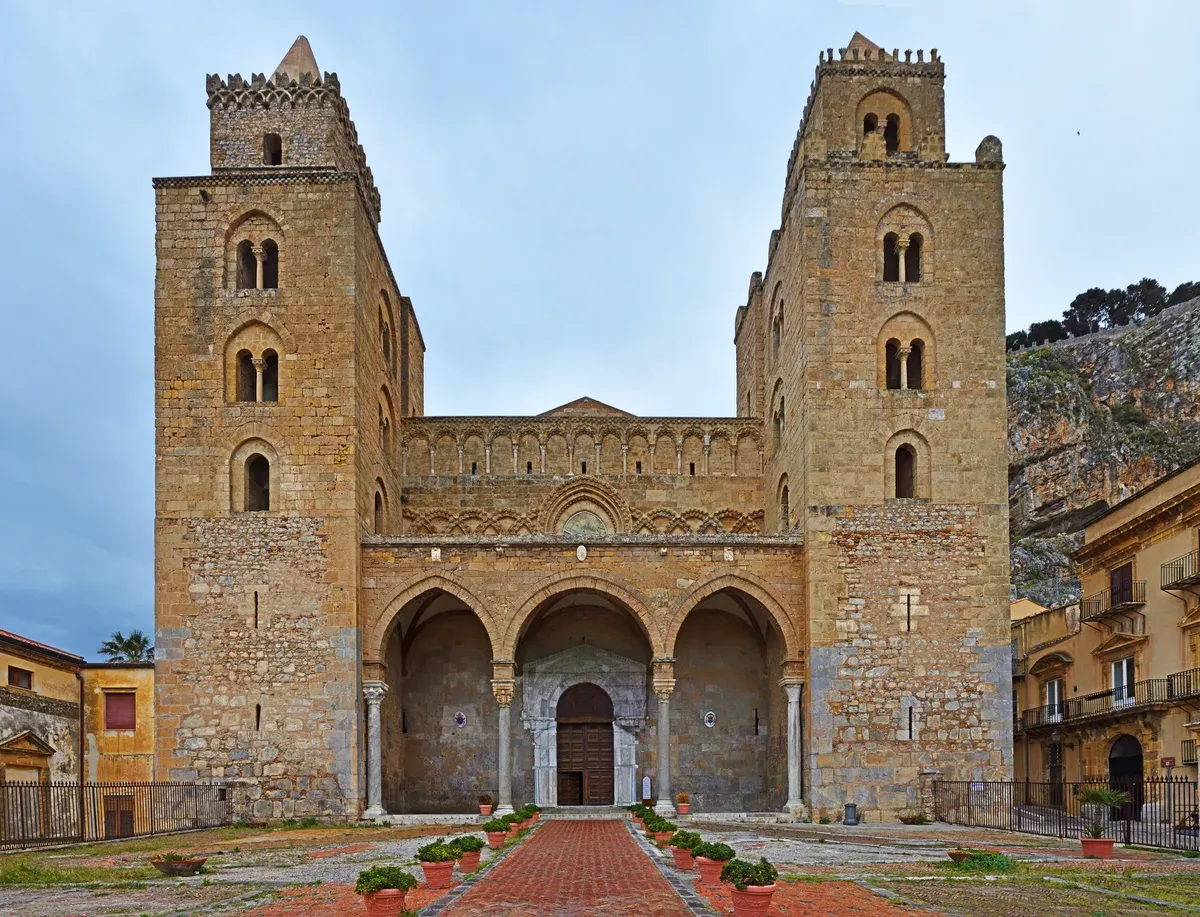
Cefalù's cathedral square, quiet outside high summer. Photo: Ludvig14, CC BY-SA 4.0, Via Wikimedia Commons
Sicily by Month: What the Calendar Actually Does
The table below uses coastal average highs for Palermo and the coasts, plus the published sea-temperature bands. These are averages, not guarantees, and inland spots such as the temple ridge run hotter than the coast in summer.
| Month | Coastal average high | Sea temperature | What the month is like |
|---|---|---|---|
| January | 15 C | Not stated | Cool coast, snow on the Etna slopes, city weather |
| February | 15 C | Not stated | Quiet, similar to January |
| March | 17 C | Not stated | Warming, still jacket weather |
| April | 20 C | Not stated | Comfortable walking, sea too cold for most |
| May | 24 C | Not stated | Sweet spot begins, mild and dry |
| June | 28 C | About 22-26 C through summer | Swimming starts, temple ridge heating up |
| July | 31 C | About 22-26 C | Hot, early starts matter |
| August | 32 C | About 22-26 C | Hottest month, afternons pass 35 C inland |
| September | 28 C | About 22-26 C | Warm sea, softer light, still busy |
| October | 24 C | Sea still swimmable through October | Mild again, last swim month |
| November | 19 C | Not stated | Wettest month on the coasts |
| December | 16 C | Not stated | Cool and quiet, city season |
A few patterns are worth naming. The shoulder months of May, September and October share nearly identical daytime warmth on paper, but the sea separates them. September water is in the summer band, May water is not.
June sits on the edge of high season, warm enough to swim, a degree or two short of the punishing ridge heat. November is the month to plan indoor backup for.
The Shoulder-Season Verdict: May-June and September-October
The verdict holds across the catalog. Shoulder season is when Sicily behaves the way postcards promise, and it is the period the listings themselves lean toward for full-day routes.
May and June
Coastal average highs of 24 to 28 degrees make this the comfortable end of the scale for long days out. This is the window for the Palermo: Agrigento and the Valley of the Temples Day Tour, an eight-hour day from Palermo where the temple entry is paid separately. The ridge is hottest June through August, so a May or early June visit uses the mild mornings before the heat arrives.
Sea swimming is usually comfortable by June.
September and October
September holds a coastal average high of 28 degrees with the sea still in the 22 to 26 degree summer band. October drops to 24 degrees and the sea remains swimmable through the month. This is prime time for the nine-hour Syracuse, Ortygia and Noto Small-Group Tour from Catania, which includes lunch but not site tickets, and for the seven-hour Catania/Taormina: The Godfather Filming Locations Tour, where the villages run cooler than the coast outside high summer and a layer is worth carrying.
One more shoulder-season habit. Autumn mornings often give the calmest sea for the Grotto, which matters for the boat tours covered below. For routes that start from the capital, see Day Tours From Palermo: The Routes That Actually Work.
One constraint does not move with the seasons: Palermo's market stalls close by early afternoon whatever the month, which is why the food walk keeps its morning and early-evening slots all year.
High Summer: What 35 Degrees Does to a Sightseeing Day
July and August are not off limits. They are a different sport. Coastal average highs sit at 31 and 32 degrees, and August afternoons regularly pass 35 degrees inland and on the temple ridge, where the sites offer little shade.
Anyone who tells you a noon temple walk in August is fine has not stood on the ridge.
How the tours adapt
The listings handle this the way locals do. Temple tours start early to use the morning, so the eight-hour Agrigento day front-loads its walking hours. Food and market walks move to cooler parts of the day.
The street food walk runs all year, and in summer it ends at a gelateria rather than a bakery, which tells you something about the season.
What actually works in August
Water first, stone second. This is the season for the Giardini Naxos, Taormina and Isola Bella Blue Grotto Boat Tour, a two-hour shared boat trip from about $41 per person, with snorkel gear available for a 10 euro extra. Remember that the Grotto entry depends on sea state, and the best odds come on calm summer and early-autumn mornings.
Schedule museums, churches and long lunches for the afternoon hours, then walk again in the evening.
Jeans are the classic packing question here. They are normal in Sicilian cities, but they are hot on an August afternoon. The What to Wear in Sicily: The Working Packing List carries the full wardrobe.
Winter on the Island: What Stays Open
Winter is the quiet trade. Coastal days run 15 to 16 degrees, which is genuinely enough for city tours, food walks and the great churches. The Etna slopes keep snow, which surprises visitors who packed for the Mediterranean and reminds you that Sicily is a mountainous island with a coastline attached.
What runs
More than people expect. The Palermo street food walk runs all year, and in winter it ends at a bakery instead of a gelateria, which is the single best detail in the whole facts file for understanding the island's seasons. City-based half days work well in the cool months, such as the From Palermo: Monreale and Cefalù Half-Day Trip, a half-day route priced at checkout.
What to plan around
Days are shorter, so full-day routes compress. November, the wettest month on the coasts, sits on either side of true winter, so keep indoor options in mind then. If you will not rent a car in the quiet months, Getting Around Sicily Without a Car covers the train and bus realities.
To decide how a short winter stay fits together, see How Many Days in Sicily: Itineraries From Three Days to Two Weeks.
Sea Season: When the Water Is Warm Enough
The sea stays swimmable from June through October, at about 22 to 26 degrees through the summer months, and October holds inside the window. These are coastal averages, and sheltered bays feel warmer than open water, but the June-to-October band is the honest answer to the swim question.
The boat season in practice
The two-hour Taormina coast boat trip, the Giardini Naxos, Taormina and Isola Bella Blue Grotto Boat Tour, is the catalog's clearest sea-season pick. Its Grotto entry depends on sea state, and the listing points to calm summer and early-autumn mornings as the best odds. That detail matters more than the calendar.
A June day with wind can close the Grotto while a late September morning opens it, so book early in the day and keep a flexible attitude.
Shoulder-season swimming
September is the best combined month for land and sea, with a 28 degree coastal average high and summer-band water. October swimming is real but cooling. May swimming depends on your tolerance, since the water has not yet reached the published summer band.
Matching the Season to the Tour You Book
Once the month is fixed, the tour choice becomes mechanical. Here is how the catalog maps onto the calendar, with current listed prices per person. Use it as a cross-check before you compare all Sicily day tours in the main table.
| Tour | Best season | Listed price | Why this season |
|---|---|---|---|
| The Original Palermo Street Food & Market Tour | All year | $85.94 (about €78), tastings included | Runs in every season, gelateria ending in summer, bakery in winter |
| Palermo: Agrigento and the Valley of the Temples Day Tour | October to May, early starts June to August | $72 (about €66), temple entry paid separately | The ridge is hottest June through August, so tours start early |
| From Palermo: Monreale and Cefalù Half-Day Trip | All year, best in shoulder and winter | from $68 on the listing | Short format suits short winter days |
| Catania/Taormina: The Godfather Filming Locations Tour | Shoulder months | $114 (about €104), castle entry included | Villages run cooler than the coast outside high summer, carry a layer |
| Giardini Naxos, Taormina and Isola Bella Blue Grotto Boat Tour | Summer and early autumn mornings | $40.65 (about €37), snorkel gear 10 euro extra | Grotto entry depends on calm sea |
| Syracuse, Ortygia and Noto Small-Group Tour from Catania | May-June and September-October | $121.94 (about €111), lunch included | Nine hours outdoors suit mild walking weather |
Prices move, ratings shift, and the boat trip above is the listing most likely to change its terms with the season, so check the live page before paying. The cheapest listed full-day option in the catalog is the Agrigento tour at $72, which is one reason it also carries one of the largest review counts.
What the Rain Actually Does in Sicily
Sicilian rain is seasonal and uneven. November is the wettest month on the coasts. Summer rain mostly arrives as short storms, which means an August shower is an event, not a season.
The rest of the year is dry enough that water management, not shelter, shapes the landscape.
Planning around it
The practical moves are few. Keep November plans flexible, with a church, market or museum as the backup. In summer, a short storm usually clears within the hour, so wait it out over lunch.
For the boat trips, remember the sea state rule, since rough water closes the Grotto regardless of Blue sky an hour later. Rain is the one factor the calendar cannot promise either way, so treat every dry-day plan as a plan, not a certainty.
If your dates are locked into November or winter, lean on the routes that run regardless. The year-round street food walk is the obvious anchor, and the half-day Monreale and Cefalù format from Palermo flexes around a wet morning better than a nine-hour day ever could.
The Shoulder Weeks Regulars Actually Pick
Ask the calendar rather than the brochures and two windows keep coming back: the second half of May into June, and the stretch from mid-September through October. Coastal averages sit between 20 and 28 degrees, the sea holds the summer's warmth well into October, and the temple ridge and the market lanes are both walkable at midday without a heat plan.
The trade-offs are small and practical. Spring carries a real chance of wind on the water, which moves the boat day's Grotto entry from likely to possible, so the morning-slot advice matters more in May than in August. Autumn trades a slightly higher chance of a rain day for warmer sea and quieter ridge paths, and the food walks run their evening slots deep into the month because the markets stay open in the soft light.
Festivals thread both windows without closing anything a visitor needs. Holy Week fills the Baroque towns with processions and hotel bookings, the summertime patronal feasts close individual streets for an evening, and the autumn food festivals across the interior are reasons to go rather than reasons to avoid. None of it moves the compared tours' schedules except on the feast days themselves.
What the Heat Actually Does to Each Tour
High summer does not close the island, it reshuffles the day. August afternoons regularly pass 35 degrees inland, so the temple day starts at opening time and finishes its ridge walk before the hottest hours, the boat day doubles down on the water where the breeze lives, and the food walk moves to its early-evening slot when the market awnings start to matter more than the menu.
The Godfather villages run their own microclimate a few hundred metres above the coast: the stone lanes hold the morning cool, and by mid-afternoon the squares that were empty at nine fill with travellers who timed it deliberately. Winter inverts the pattern, with short days that still serve the churches and the food walks while the ridge sites close earlier.
The honest verdict for July and August travellers is a morning-first itinerary. Book the early slots, keep the middle of the day for the hotel pool or a long lunch, and let the evenings carry the towns. Every listing in this comparison carries free cancellation up to 24 hours before the start, which is exactly the flexibility a heat wave asks for.
How the Months Map onto the tours compared here
The street food walk runs all year and never really changes: three hours on foot through covered lanes and awnings, with the summer version ending at a gelateria and the winter version at a bakery. It is the one listing in this comparison that books identically in January and August.
The boat day lives and dies by the weather calendar. June through September give the calmest water and the most reliable Grotto entries, the shoulder months trade a real chance of a re-routed morning for an empty boat, and the winter schedule thins to weekends or stops entirely depending on demand. The sunset dolphin option is a high-summer pleasure by definition.
The temple ridge has two good seasons and one hard one. May, early June and every week of October walk comfortably. July and August belong to the early-morning departures.
Winter shortens the opening hours and keeps the wind. The Godfather villages and the Monreale half-day sit in between, runnable in every month but most pleasant in the shoulder weeks when the hill lanes are cool and the churches are quiet.
Best Time to Visit Sicily: Questions Answered
What is the rainy season in Sicily?
November is the wettest month on the coasts. Summer rain mostly arrives as short storms that pass quickly. Keep indoor options in mind for late autumn plans.
What is the best month to go to Sicily, Italy?
May, June, September and October are the strongest months, with coastal average highs between 24 and 28 degrees. September adds summer-band sea temperatures of 22 to 26 degrees. July and August work if you start early. For the full verdict, see Best Time to Visit Sicily: A Month-by-Month Verdict.
Is Sicily too hot in August?
August is the hottest month, with a coastal average high of 32 degrees, and afternoons regularly pass 35 degrees inland and on the temple ridge, where shade is scarce. It is workable with early starts, water-focused days and long lunches. Jeans are normal in cities but hot on an August afternoon, see What to Wear in Sicily: The Working Packing List.
Can you swim in Sicily in October?
Yes. The sea stays swimmable from June through October, at roughly 22 to 26 degrees through the summer months, and October sits inside that window. It is the last month of the published swimming season, and the water is cooling. These are coastal averages, not guarantees.
What is the cheapest month to visit Sicily?
Winter, from November to March outside the Christmas and Easter weeks, is the quiet trade, when demand is usually at its lowest. On the tour side, the cheapest listed full-day option in the catalog is the Agrigento day tour at $72 per person.
Do Sicily tours run in winter?
Several do. The Palermo street food walk runs all year, ending at a bakery in winter instead of a gelateria, and the Monreale and Cefalù half-day trip suits short winter days. Winter coastal highs of 15 to 16 degrees are enough for city tours and churches, while the Etna slopes keep snow.